A New-Build Apartment in a Historic District |
Area: 47 m² |
Location: Kraków |
Status: completed |
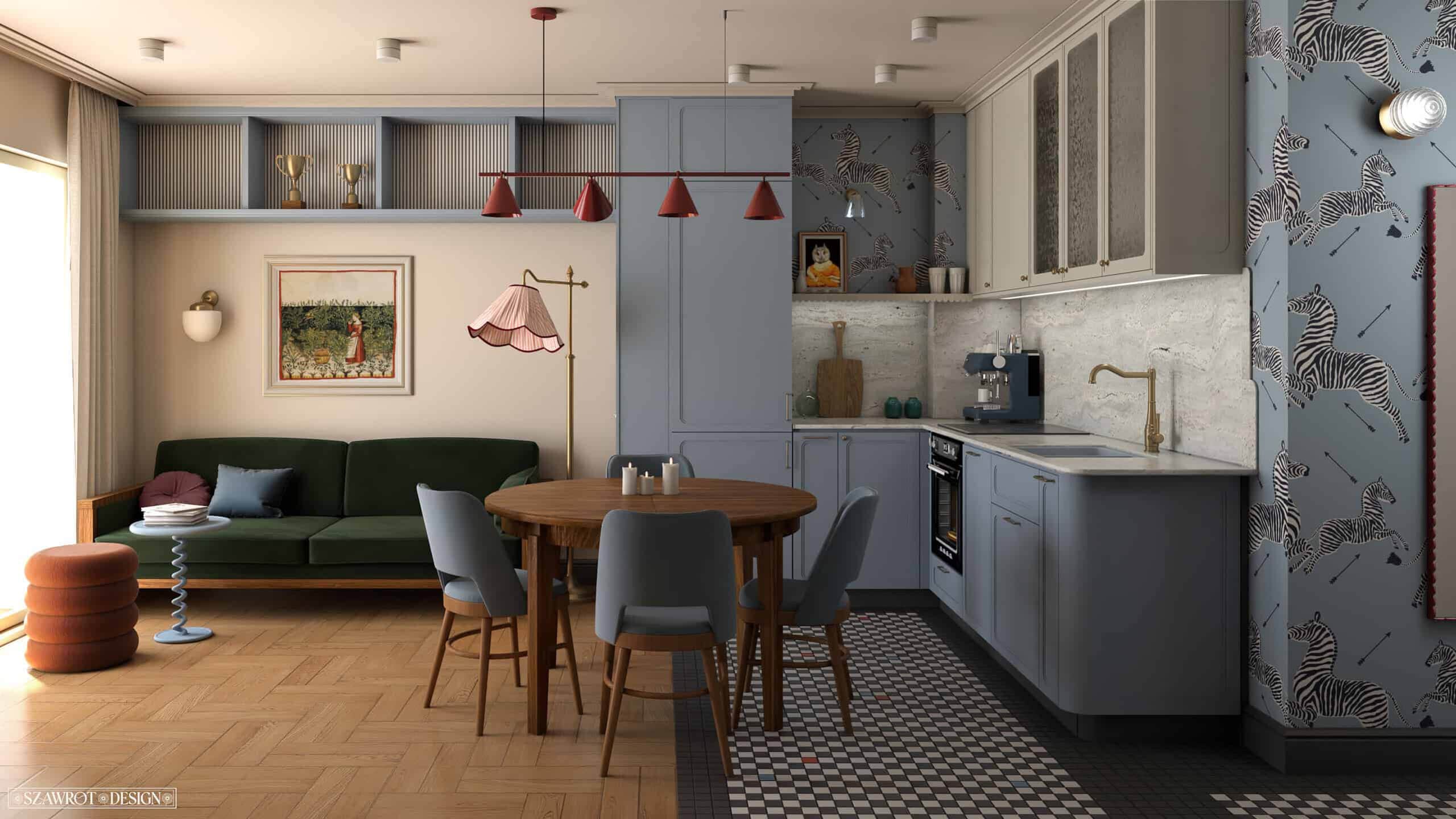
The apartment is located in a contemporary residential building in Podgórze, one of Kraków’s historic districts, where new development sits within a much older urban fabric. The project therefore began not with an attempt to imitate a period interior, but with the question of how a new apartment might acquire depth, individuality and a measured relationship with its surroundings.
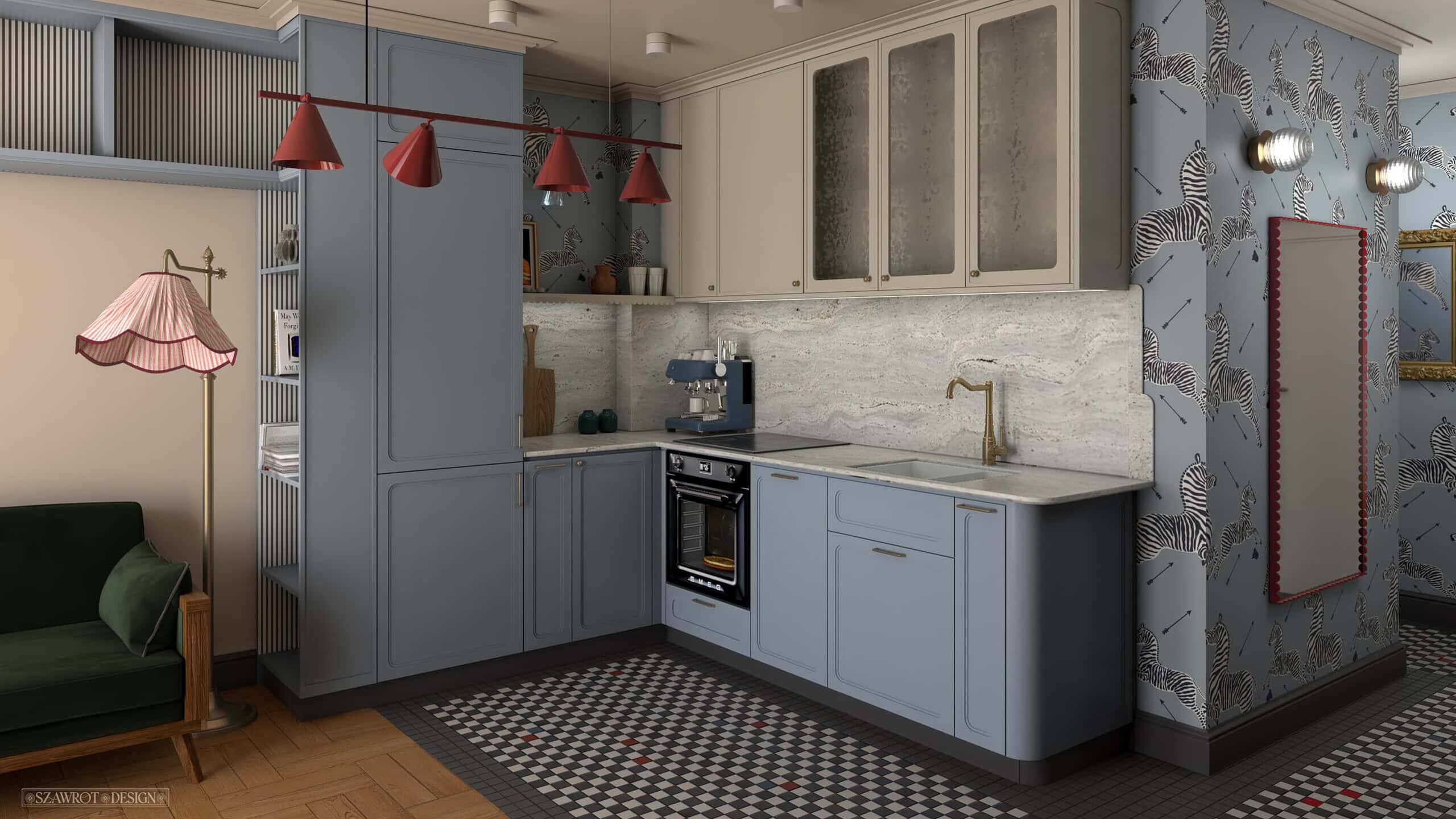
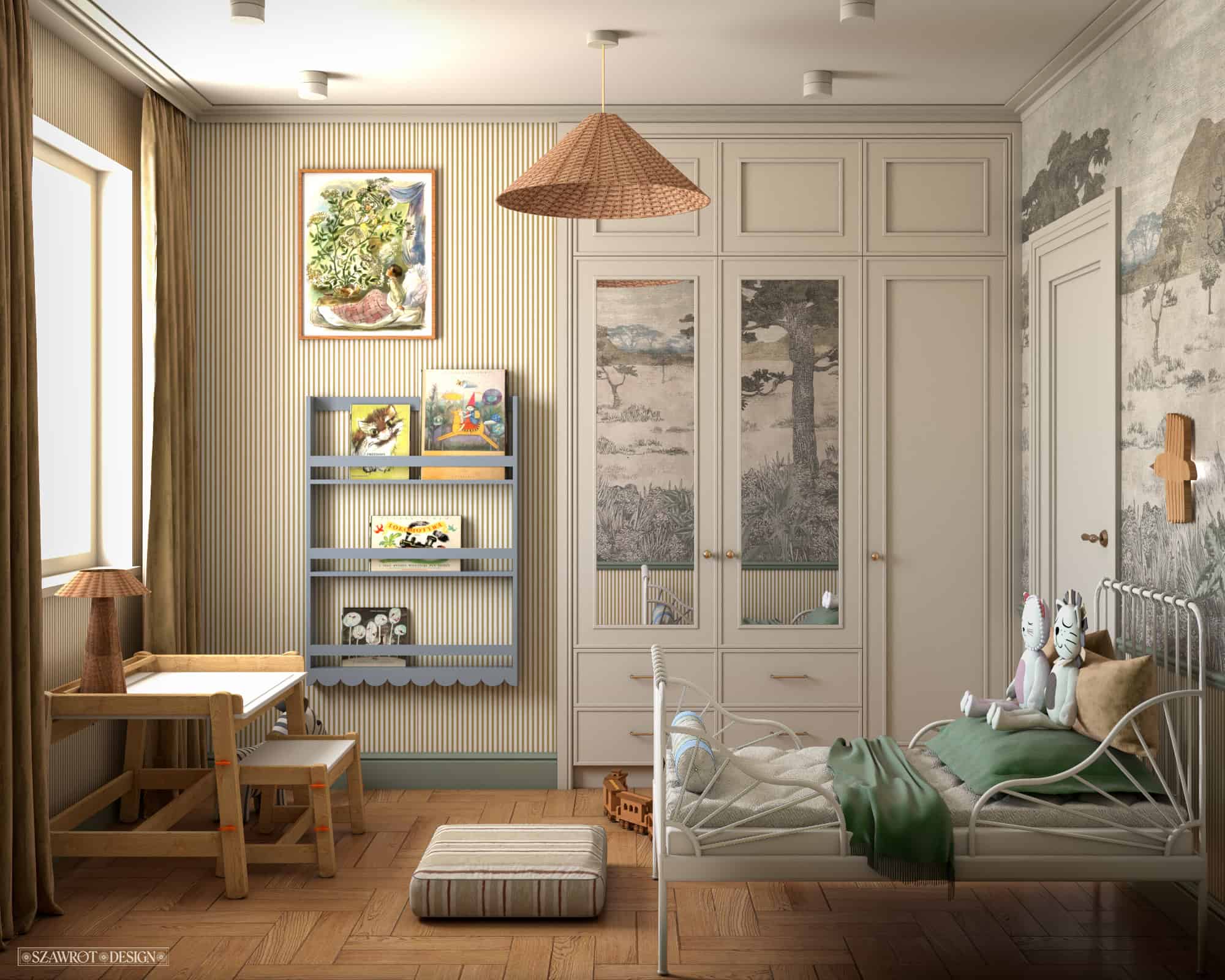
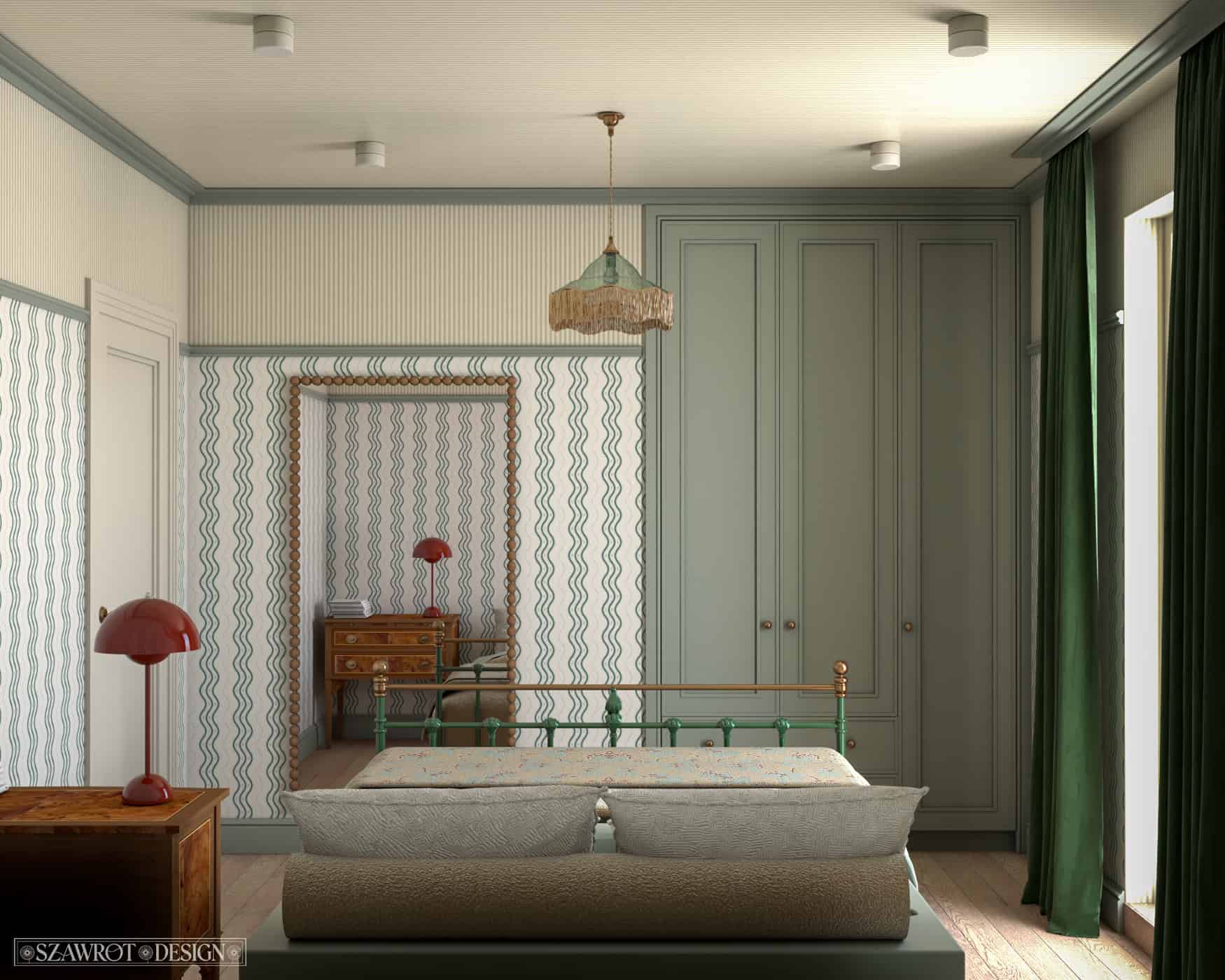
At 47 square metres, the space had to accommodate the everyday needs of a family, including ample storage and a place to work. Bespoke joinery organises these functions and keeps the individual zones legible, without allowing practical requirements to dictate the character of the interior.
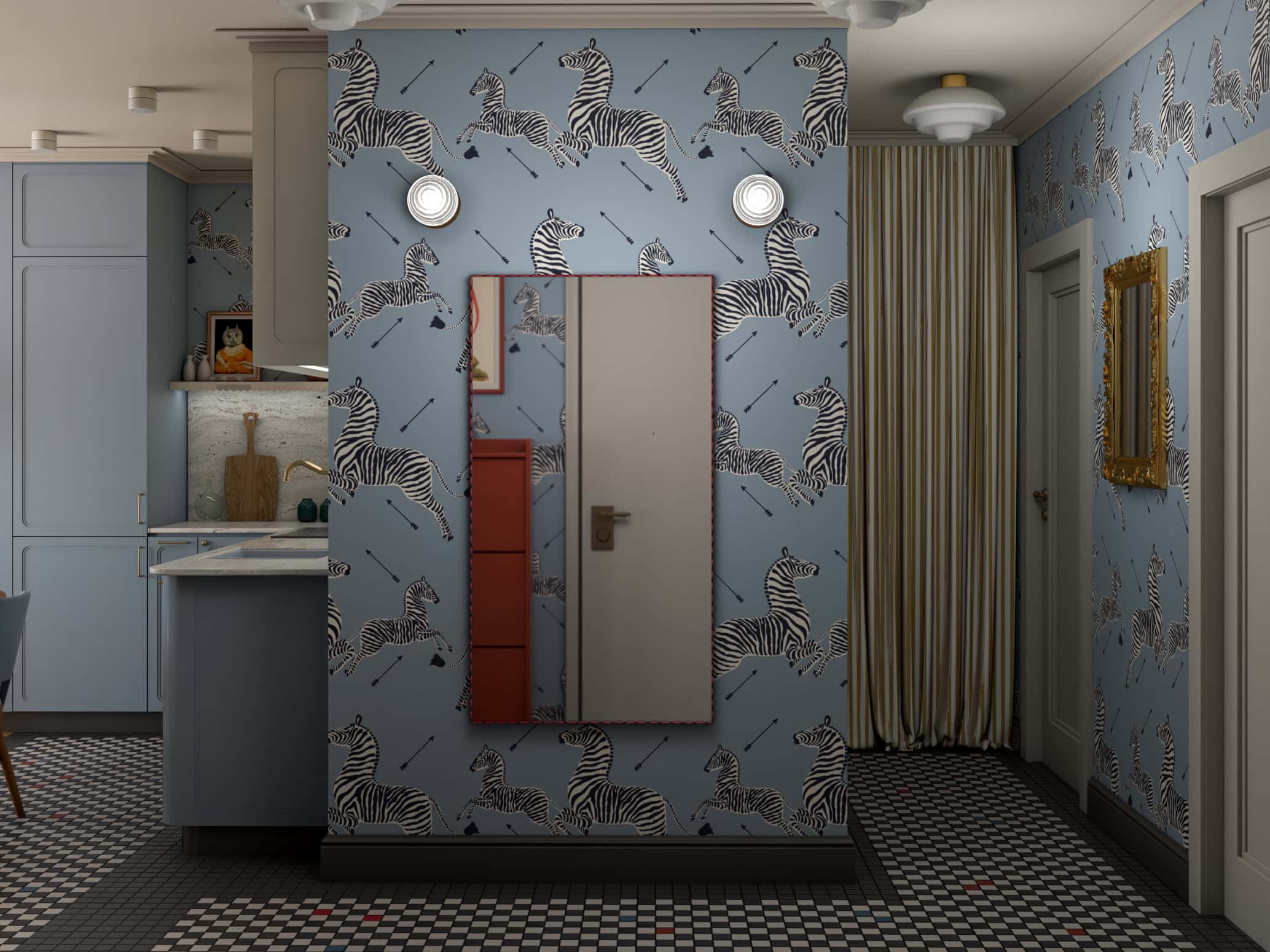
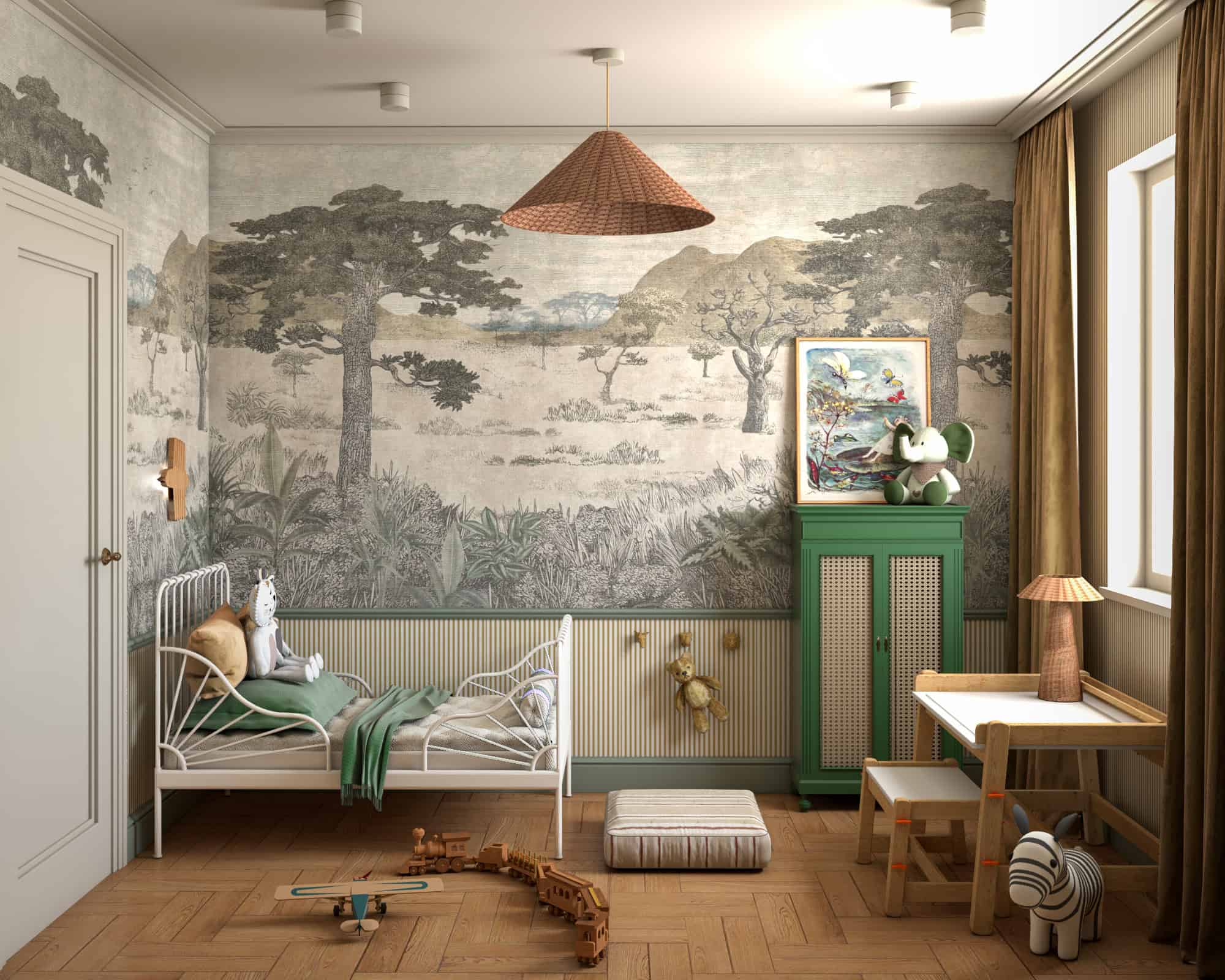
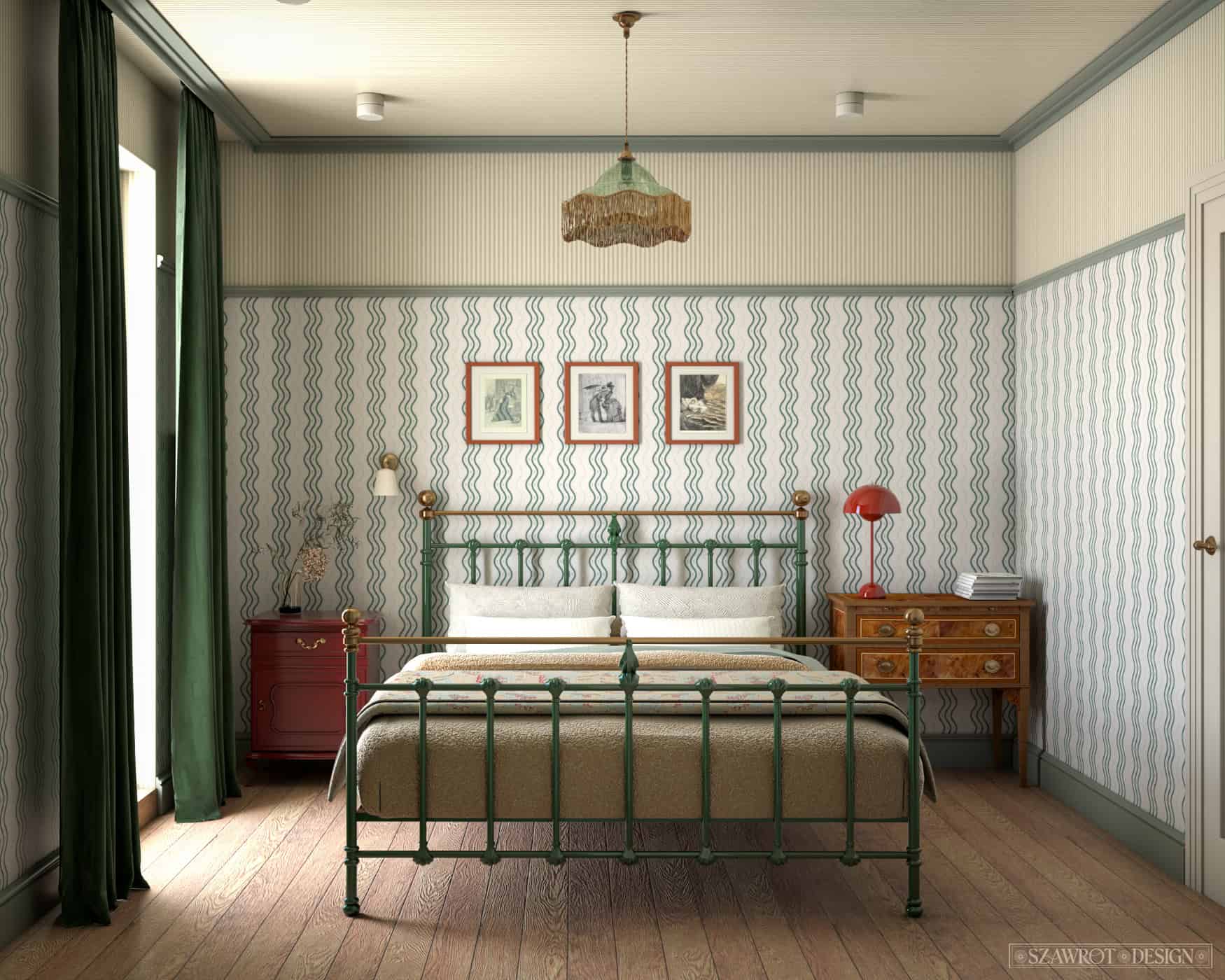
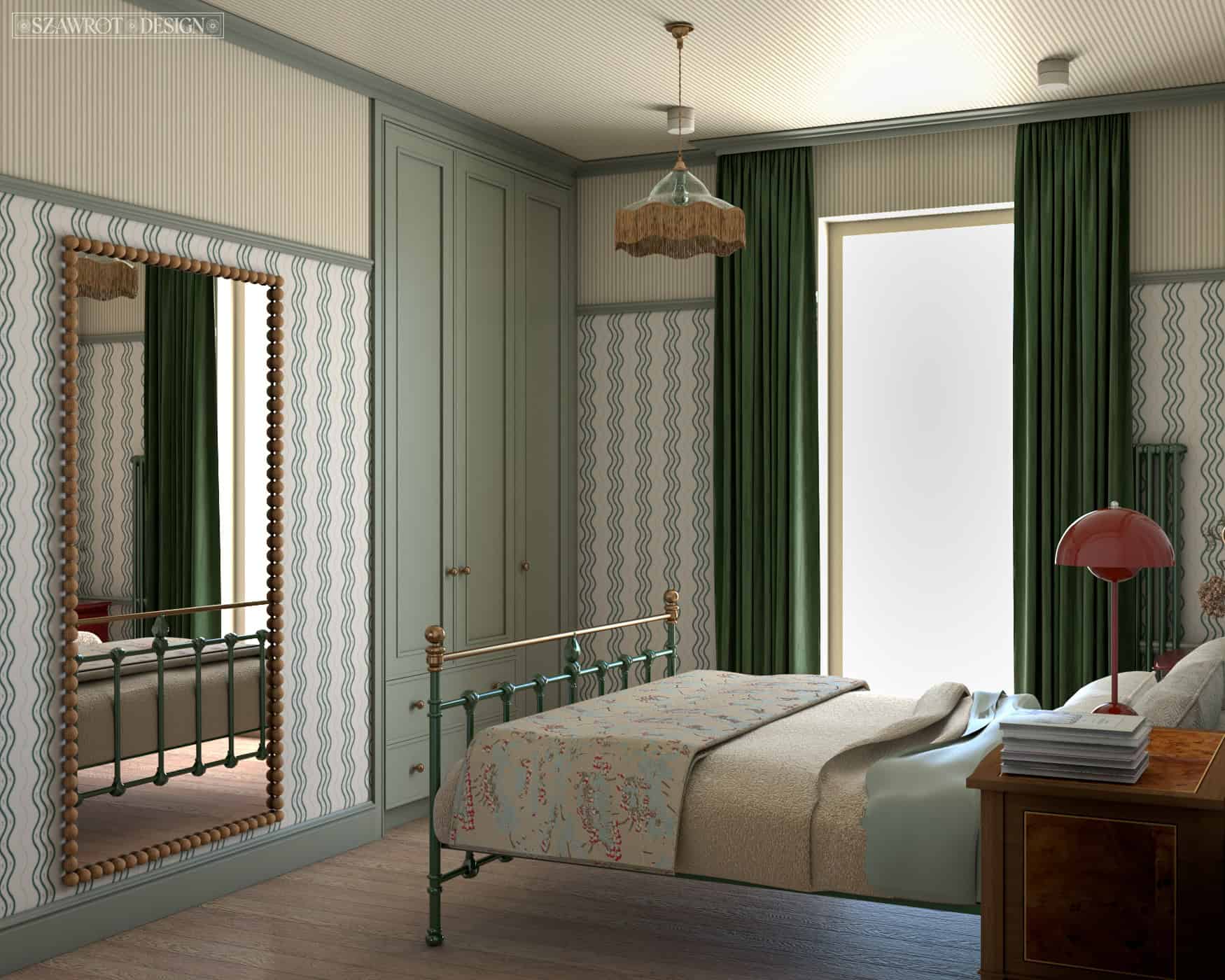
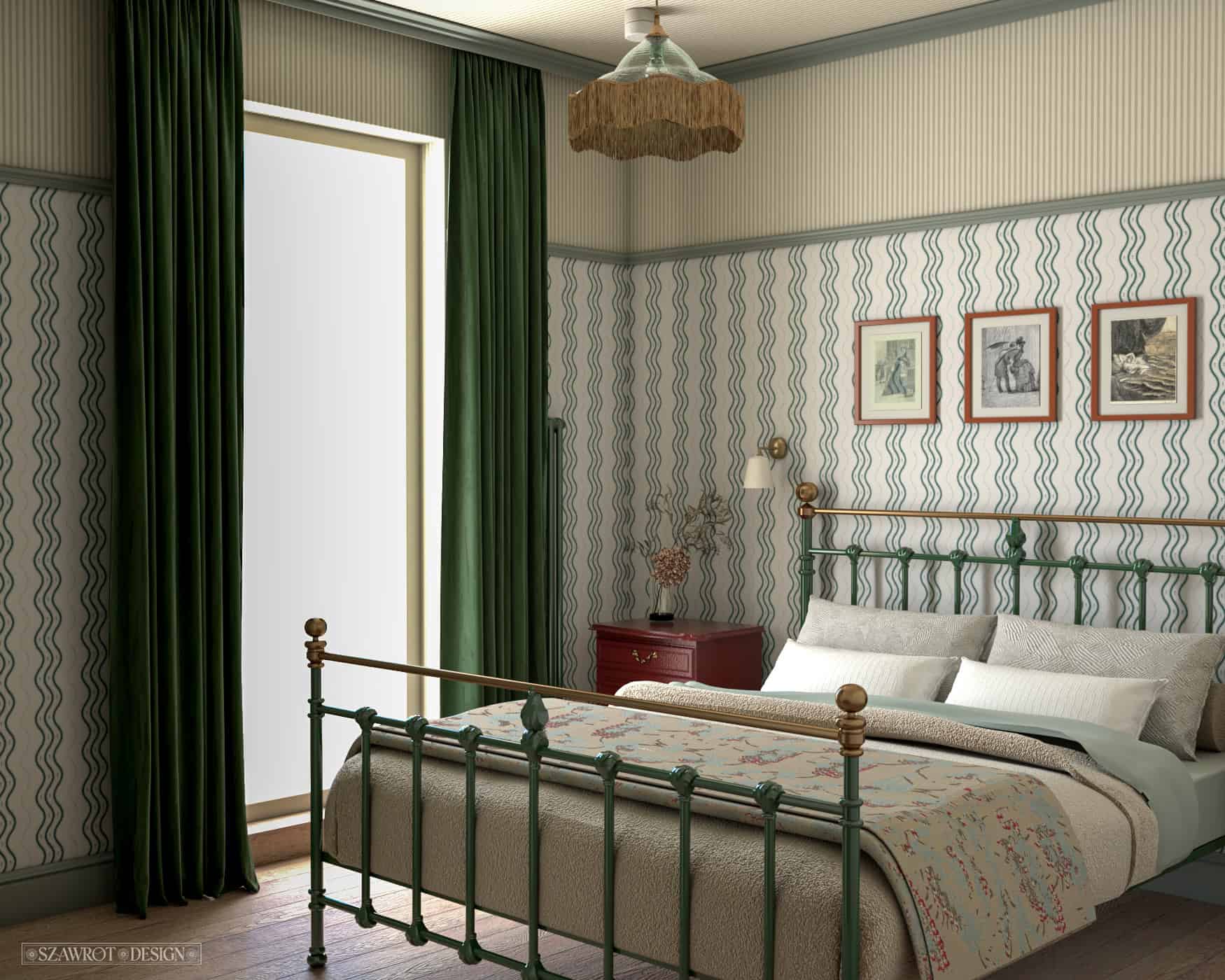
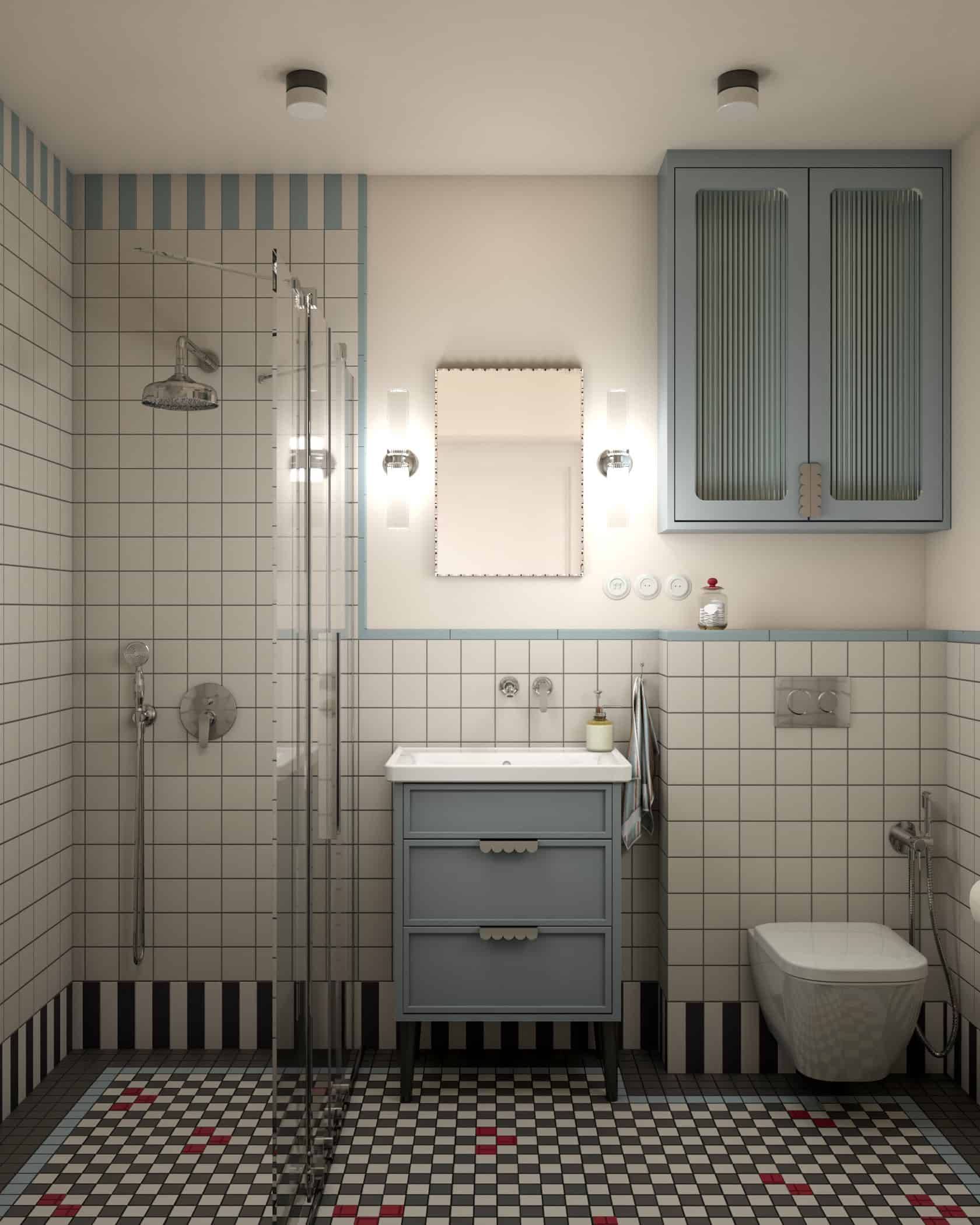
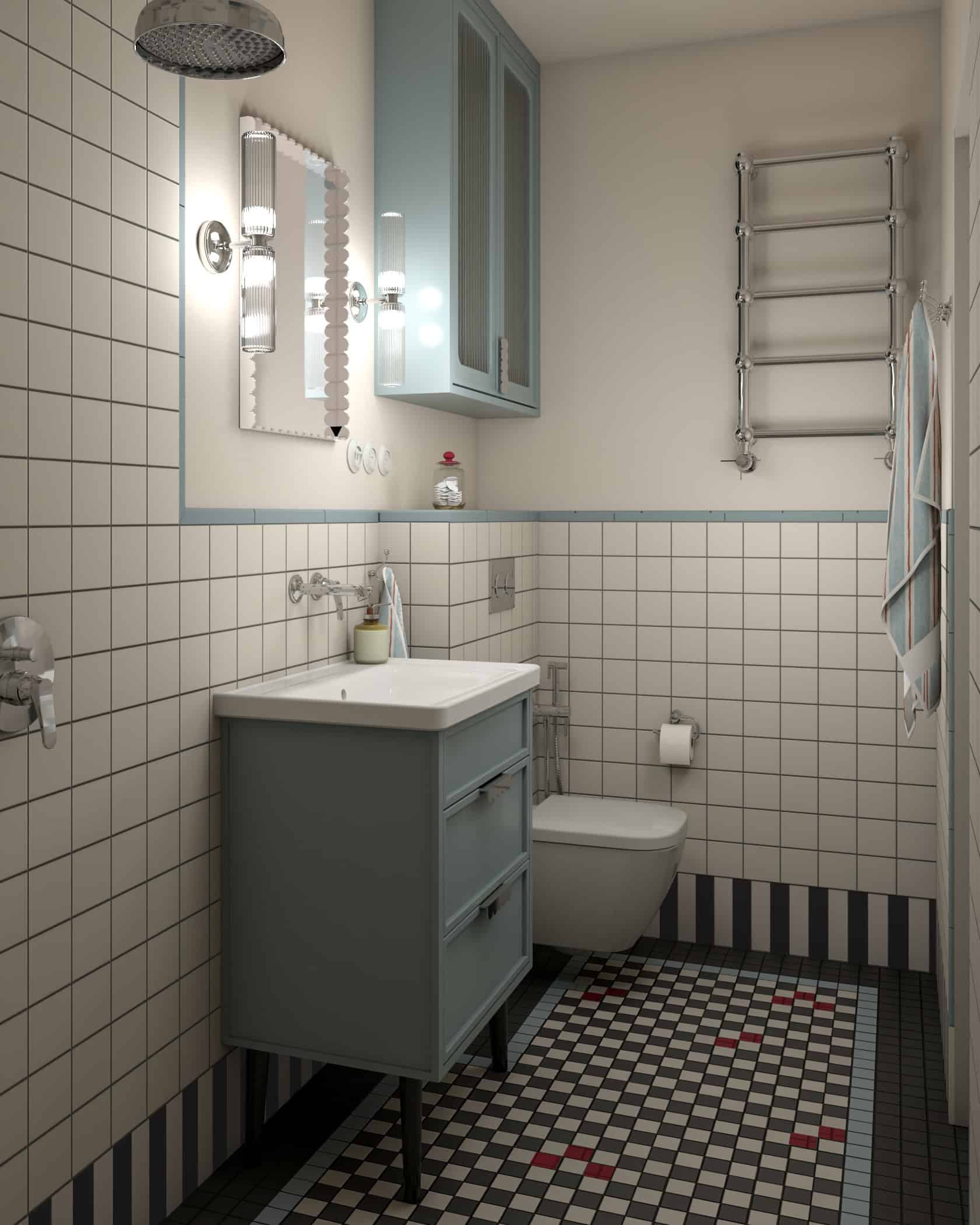
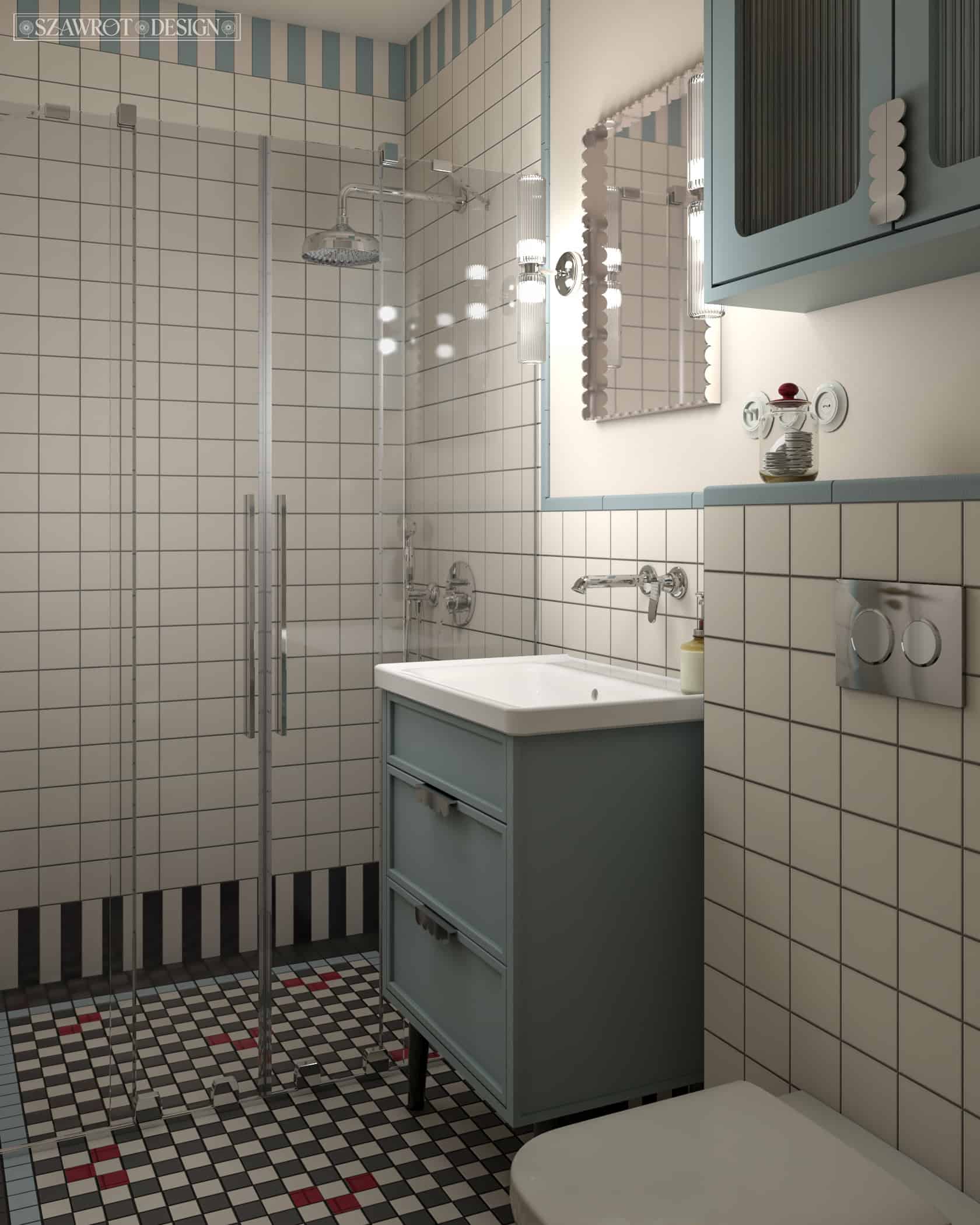
The visual language is built around stripes, zebras and a checkerboard grid. In the entrance and living area, the zebras introduce the theme almost literally; their markings are echoed by striped wallcoverings and the narrow vertical divisions of the suspended cabinetry above the sofa. The mosaic floor translates the same principle into a geometric pattern, with occasional coloured squares disrupting its black-and-white order. In the bedroom, straight and undulating stripes are combined with deep green, dark timber and brass. The child’s room uses a quieter version of the motif, set against a panoramic landscape wallcovering. Even the bathroom returns to the grid, though in a more restrained form.
Traditional references — herringbone parquet, framed joinery, brass fittings and several vintage or vintage-inspired forms — are used selectively. They do not make the new-build apartment pretend to be old; instead, they establish a certain continuity with the historic district around it. Powder blue, muted greens and red accents keep the composition light and prevent the repeated patterns from becoming overly formal.
The apartment is therefore held together not by a single colour or recurring pattern, but by a shared principle of rhythm and its disruption. This allows each room to retain its own character while the whole remains legible and coherent. The limited floor area does not lead to restraint: the interior is functional yet expressive and decorative, without turning into a stage set.